
Julie Banerjee Mehta writes about ‘Amar Jiban’ in ‘The Telegraph’, India
Excerpts from Julie Banerjee Mehta’s article, published on 10 October 2026:
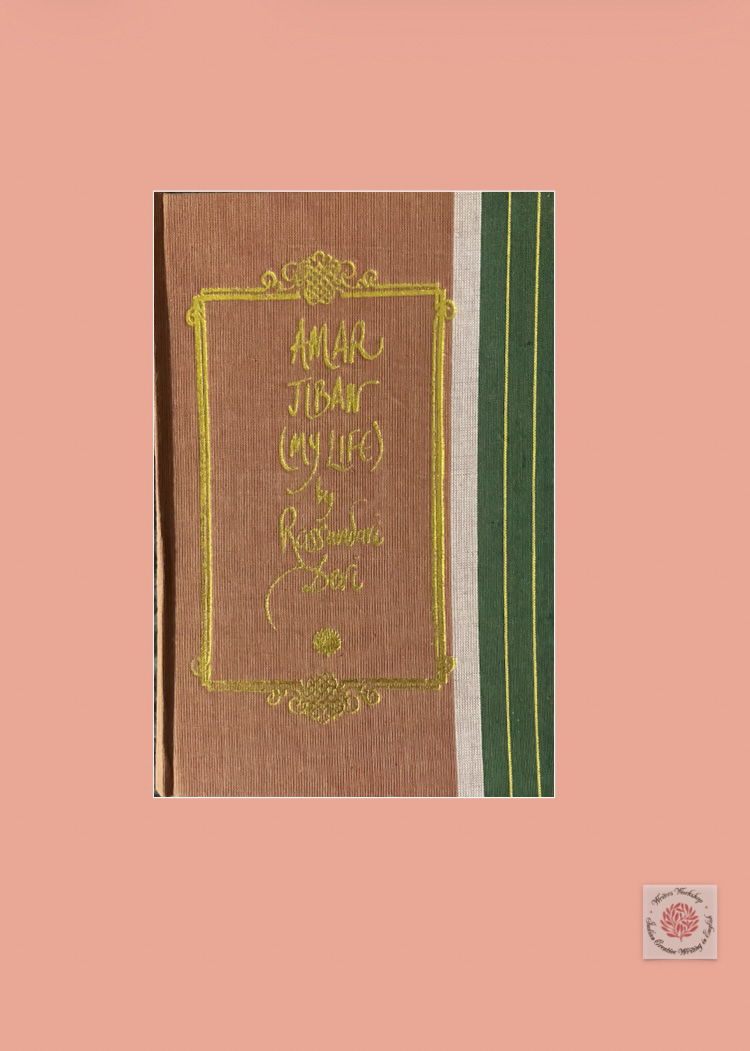
Cover image of ‘Amar Jiban’
It was a serendipitous tribute to Rassundari Devi, the woman who wrote the first full-length autobiography in Bengali, which celebrates its 150th anniversary this year.
She was feted appropriately at the International Translation Day conference headlined “Linguistic Diversity and Language Rights”, organised by the International Society for Intercultural Studies and Research and Virasat Art Publication.
At the event, held on September 30 under the stewardship of Dr Sudipto Chatterjee and professor Sutanuka Ghosh Roy, I introduced the revised edition of Rassundari Devi’s Amar Jiban (My Life), published, revised and annotated by Ananda Lal of Writers Workshop, and translated from Bengali by Enakshi Chatterjee.
The conjoined events of International Translation Day, bookmarked as a UNESCO initiative, and the landmark 150 years of Amar Jiban hit their target: translation is now considered a planetary marker of the importance of cultural exchange between communities, economies, and people …
Rassundari was self-taught and coined the remarkable word “jitakshara“, meaning a person who had triumphed over the written word. But it was not just the word she had triumphed over; she also triumphed despite the death of her children and the massive challenges she faced from the patriarchy.
Ananda Lal told me: “I retranslated the book because I thought, to celebrate the 150th year of its publication, we should do full justice to her historic, extremely important, prose-cum-verse work. Those who can’t read Bangla need to know about a woman’s life in the mid-19th century first-hand. I also annotated the book heavily because a non-Hindu wouldn’t understand many of her references. In fact, many Hindus today wouldn’t comprehend them either! There is a huge diasporic audience too who must have access to it.”
You can read the article here.
Related posts of interest: