
Hikayat Maharaja Rawana
Translator: Harry Aveling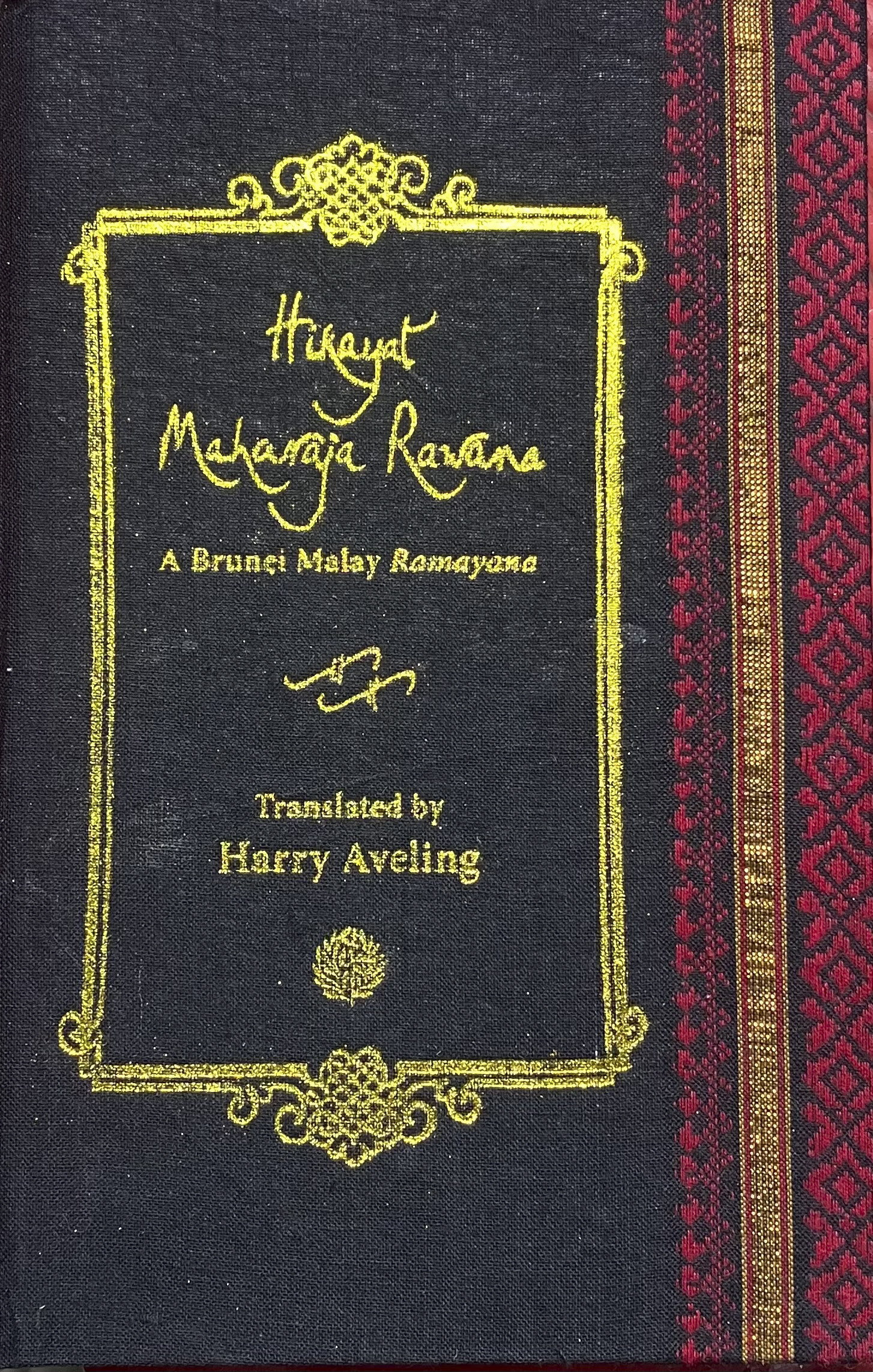
Pages: 102
Year of Publication: 2026
Price: ₹500 / $16 (USD)
ISBN: 978-81-995932-0-6 (9788199593206)
About the Translator
Professor Harry Aveling (PhD, Malay Studies, National University of Singapore; Doctor of Creative Arts, University of Technology, Sydney) holds honorary appointments in Translation Studies at Monash University, and Asian Studies at La Trobe University, both in Melbourne, Australia. He has translated extensively from Indonesian and Malay, and co-translated from Hindi. In 1991 he received the Anugerah Pengembangan Sastera (Literary Development Award) for his “commitment to the international understanding of Malay literature”. His previous publications with Writers Workshop, India, include Arjuna in Meditation: Three Young Indonesian Poets (1976); The Mastadon and the Condors by W. S. Rendra (1981); The Interior Landscape of the Heart: Tamil Poetry from Malaysia and Singapore (1981), with Dr R. Dhandayudham; and Koong, The Story of a Pigeon (1986) by Iwan Simatupang. Most recently, Writers Workshop has published his translations of the Hikayat Seri Rama: The Malay Ramayana (2020), Traces by André Nayer (2022), and Hikayat Pandawa Lima: A Malay Mahabharata (2024).
About the Book
This is the third book in Professor Aveling’s series of translations of the Malay renditions of the Ramayana and Mahabharata. In his introduction to the book, he writes:
“It has been estimated that there are over 300 versions of the Ramayana…
This book adds a new Ramayana epic from the Malay world. It may have come to Brunei from the empires of Srivijaya (South Sumatra, 7th-13th centuries) and Majapahit (east Java, 13th-15th centuries), both of which carried Indian culture throughout the archipelago. The Malay version may also have derived from Melaka (1400-1511), which had a rich literary tradition. It is clear that the Rama story was also well known among the kingdoms in the Sulu Sea (Juan Francisco 1969) to the northeast of Brunei…
The State and Warfare
The text presented here starts in mid-sentence, and lacks both the beginning and ending of that whole Rama narrative. The story of Siti (Sita) Dewi’s kidnapping by Maharaja Rawana is not told. She first appears in the context of Hanuman’s bringing her a message from Sahirama (Rama).There are no stories of her birth, their marriage, her early time with Rama, her testing by fire, or her final return into the earth again.
The text derives from a barely Islamic environment. It contains neither poetry nor philosophy. Sahirama is descended from Bisnu (Vishnu) but is not treated as a god. Instead he is respected as a superior being, who implicitly unites two religious traditions. On his mother’s side, he is the grandson of Bisnu. On his father’s side, he is also the grandson of the Muslim Prophet, Adam, who is greatly revered in the Hikayat.”
Book Buying Inquiry
"*" indicates required fields